Uganda Hosts NAM Midterm Ministerial Meeting, Renewing Call for Unity & Shared Global Prosperity
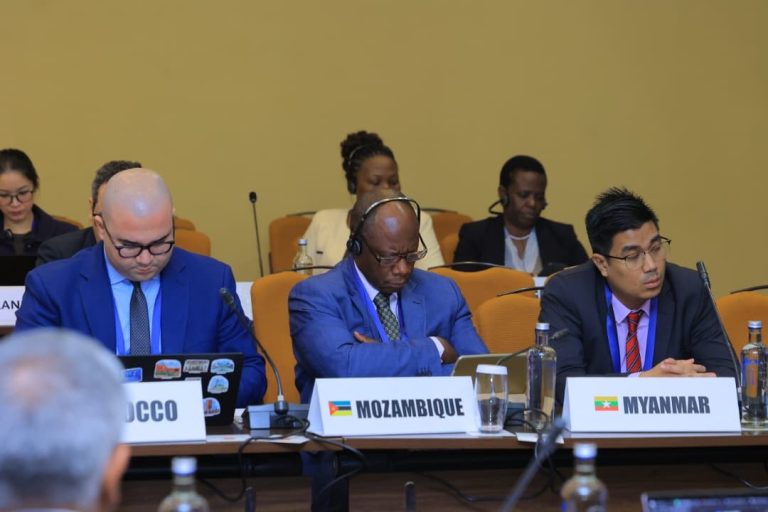
Kampala, Uganda Uganda is hosting the Midterm Ministerial Meeting of the Non-Aligned Movement (NAM) at Speke Resort, Munyonyo, under the theme “Deepening Cooperation for Shared Global Affluence.”
The meeting brings together ministers of foreign affairs from NAM member states, observer countries, and relevant organizations. As the current chair of NAM (2024–2027), Uganda is using this diplomatic platform to reaffirm its leadership role and to galvanize member states around collective action on peace, development, and reform of global governance.
Opening & Key Messages
The meeting was formally opened by Uganda’s Foreign Affairs Minister, General Jeje Odongo, who underscored Uganda’s “steadfast” commitment to the non-aligned principles of unity, sovereignty, and cooperation. In his address, he emphasized that NAM must revitalize South–South collaboration and support the Global South to overcome structural challenges.
Minister Odongo singled out Palestine as a central concern for NAM, reiterating the movement’s traditional stance in support of humanitarian law, international resolutions, and pursuit of a Two-State Solution. He warned that the global trading and financial architecture remains tilted against developing nations, and urged reforms to ease access to finance, investment, and equitable trade for NAM states.
Agenda & Deliberations
Key issues on the agenda include:
Review of implementation of the outcomes of the 19th NAM Summit (hosted by Uganda in January 2024)
Formulation and adoption of a Kampala Outcome Document to guide NAM’s future direction
Strengthening multilateralism, and pushing reform in the UN system and multilateral development banks to reflect realities of the Global South
Industrialization, technology transfer, job creation, trade and investment cooperation among NAM states
Peace, security, decolonization, and conflict resolution (with particular attention to occupations, sovereignty issues, and international law)
The meeting is structured into sub-committees (Economic, Political, Social) before coalescing into plenaries for adoption of final texts.
Uganda’s Role & Stakes
Uganda assumed the NAM chairmanship in January 2024, following the 19th Summit in Kampala. As chair, Uganda is under pressure to deliver strong outcomes that validate its diplomatic leadership. It is also using the meeting to highlight its positioning as a hub for Global South cooperation.
President Yoweri Museveni is expected to deliver a keynote address mid-week, setting the tone for Uganda’s vision during its tenure. The government has also deployed heightened security, logistics, and protocol preparation to ensure the event’s success.
Challenges & Expectations
Observers note several challenges:
Diplomatic coherence: NAM comprises diverse states with varying priorities; forging consensus is often difficult.
Resource constraints: implementing ambitious declarations often runs into funding bottlenecks.
Global geopolitics: pressures from major powers may complicate NAM’s push for neutrality or reform.
Follow-up and accountability: adoption of declarations is one step — translating them into action is the true test.
Still, expectations are high. Uganda hopes the meeting will produce a strong, actionable outcome document, increased visibility for Africa’s voice, and renewed momentum for South–South cooperation.