Uganda’s Electric Revolution: Boda Bodas Go Battery-Powered
Kampala, Uganda
The familiar roar of Kampala’s traffic is getting a quiet rival. From Jinja Road to Wandegeya, more boda bodas are humming softly — not from fuel, but from lithium-ion batteries. Uganda’s e-mobility sector is accelerating, powered by homegrown innovation, policy backing, and the promise of cleaner, cheaper transport.
Homegrown Heroes: Kiira Motors & Spiro Lead the Charge
At the forefront is Kiira Motors Corporation (KMC), Uganda’s flagship automotive company. Known for its solar bus prototypes and electric sedans, Kiira has now turned its attention to mass-market solutions. Its pilot fleet of Kayoola EV buses already serves the airport route and major public corridors in Kampala, cutting emissions and fuel costs by over 60%.
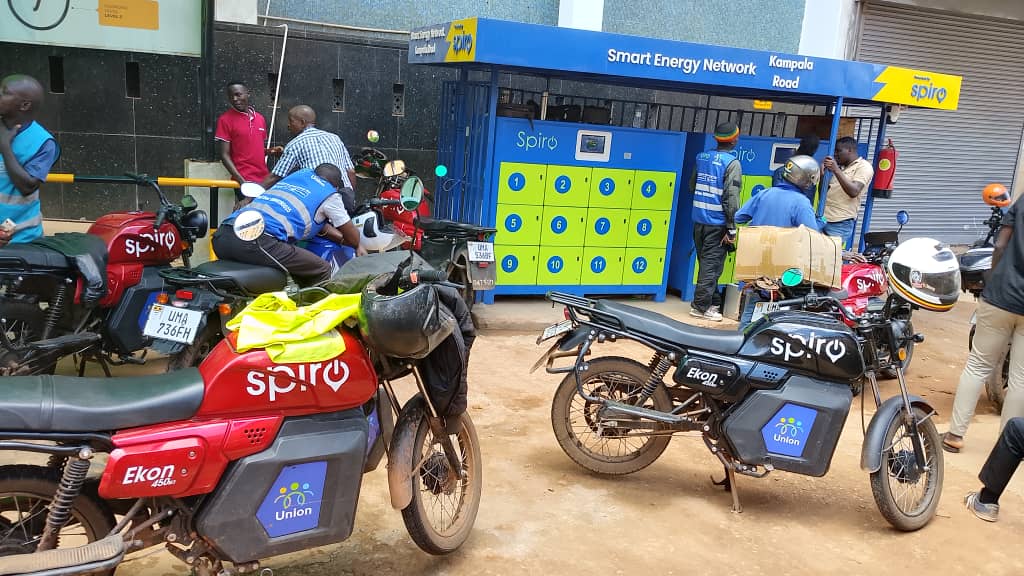
Meanwhile, Spiro Uganda, formerly Ampersand, has taken the boda boda industry by storm. Through its battery-swapping model, riders can exchange depleted batteries for fully charged ones in minutes — a system that eliminates “range anxiety” and keeps the wheels turning.
“We’re not just electrifying transport — we’re redefining livelihoods,” said Douglas Kaggwa, Spiro Uganda’s operations lead. “Our goal is a network where any boda rider can charge, swap, and ride without worry.”
The Numbers Behind the Change
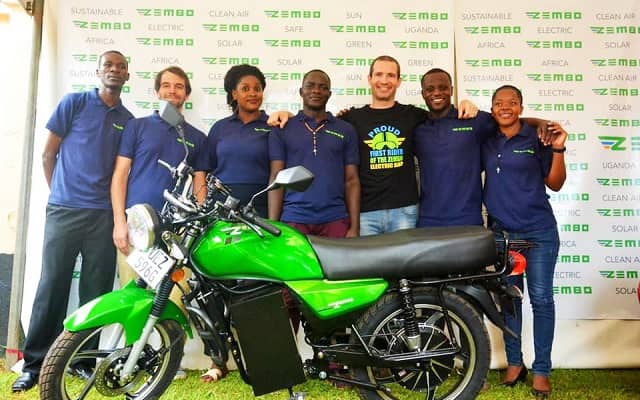
According to the Ministry of Energy and Mineral Development, Uganda now hosts over 10,000 electric motorcycles and nearly 50 public charging or swapping stations nationwide. The growth is supported by tax incentives on electric vehicles (EVs) and parts, and an expanding network of private charging companies like Gogo Electric, Ecobodaa, and Future Energy Group.
A single e-boda can save riders up to UGX 300,000 per month in fuel costs, while reducing CO₂ emissions by up to 1.5 tonnes annually.
Challenges Remain
Despite growth, roadblocks persist: high import tariffs on batteries, limited local assembly capacity, and inconsistent electricity in rural areas. But innovators are responding — several startups are piloting solar charging hubs, particularly in off-grid towns like Mbale and Mbarara.
“Uganda’s e-mobility story must be a rural story too,” said Engineer Martha Nabunya of the National Renewable Energy Platform. “It’s not just about luxury EVs — it’s about affordable, sustainable motion.”
With global oil prices fluctuating and the country’s urban population growing, e-mobility offers both climate resilience and economic freedom. Uganda’s roads are changing — quietly, and sustainably.