
Uganda and Kenya Push Ahead on Standard Gauge Railway (SGR) — A New Era for Regional Connectivity
A Rail Link That Spans Borders
Kampala/Nairobi
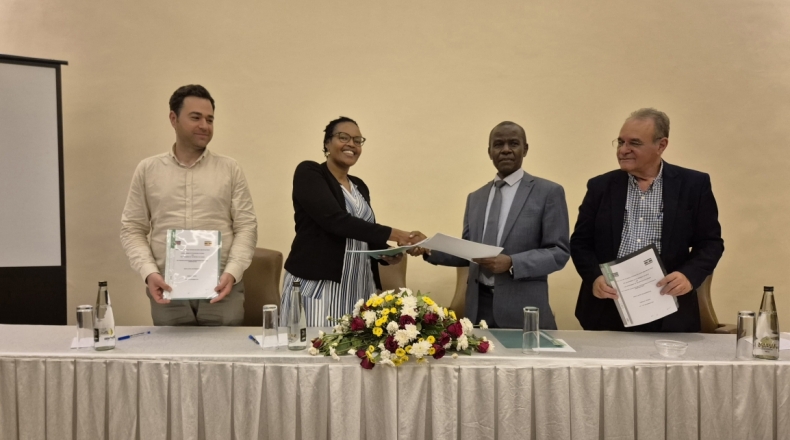
Uganda and Kenya have committed to finalising the SGR link that will stretch from Nairobi’s Naivasha, through Kisumu and Malaba, to Kampala — transforming freight and passenger movement across East Africa. In a joint communiqué signed at the SGR terminus in Mombasa, transport ministers from both countries confirmed that work will begin in December 2025, contingent on funding availability.
Concurrently, Uganda is advancing land acquisition in Mukono, Wakiso and Kampala — among the final districts along the planned corridor. Negotiations and compensation processes are under way as authorities prepare for construction.
As governments and development partners mobilise resources, the SGR link is gaining traction not only as infrastructure but as a strategic corridor tying together markets, ports, and landlocked economies.
Why It Matters
The SGR promises a transformative shift in how goods and people move across East Africa. Once complete, Uganda and Kenya will have a fast, reliable rail corridor connecting the Indian Ocean at Mombasa with the interior — significantly reducing transit times for freight and reducing road‑congestion, wear and tear on highways.
For landlocked Uganda, a seamless rail link opens up more efficient access to global markets through the port of Mombasa, lowering logistics costs and boosting trade competitiveness. For ordinary commuters, it offers a safe, modern alternative to congested road travel. On a regional level, the SGR fosters deeper integration — trade routes, economic corridors, and cross‑border exchange become smoother and more predictable.
The renewed commitment also signals to investors and development partners that East Africa’s transport infrastructure is entering a new phase: one driven by coordination, long‑term planning, and inter‑country cooperation rather than fragmented patchwork solutions.

What to Watch
Execution — particularly funding, land compensation, and technical harmonization — will define success. As Uganda and Kenya proceed, monitoring whether land acquisitions proceed fairly and without delays will be key. Technical harmonisation between Kenya’s Chinese‑based rail standards and Uganda’s European‑based legacy will need careful coordination to ensure interoperability.
Stakeholder engagement — including communities along the corridor — will also be vital. For local economies to benefit, complementary infrastructure (e.g. feeder roads, storage & logistics hubs) must accompany the rails. Finally, uptake — both for cargo operators and passengers — will show whether the SGR shifts travel and trade behaviour as intended.